

MTB FAQs for Mountain Biking in Oaxaca
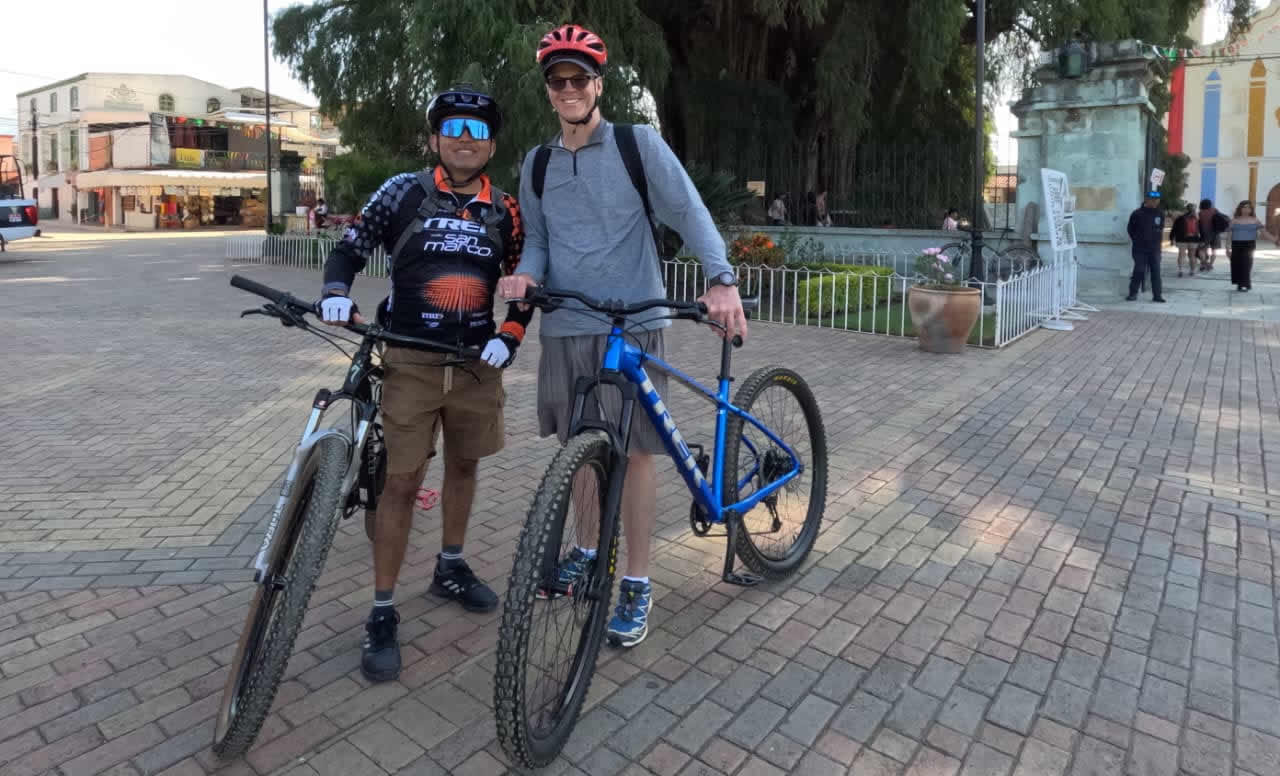
Do I need a hardtail or a full suspension bike for Oaxaca trails?
The right frame depends on where you plan to spend most of your saddle time. Oaxaca offers firm valley singletrack, chunky foothill connectors, and long forest descents in the Sierra Norte. A hardtail is lighter, simpler, and usually more affordable. It rewards smooth line choice and efficient climbing on the valley loops. A modern hardtail with a 120 to 140 millimeter fork, wide rims, and aggressive tires can handle a surprising amount of trail while keeping maintenance low. A full suspension bike adds rear travel that keeps the back wheel glued to the ground over roots and rock steps. That traction improves control on steep Sierran pitches and reduces fatigue on hour long descents. The tradeoffs are weight, cost, and more service. If your plan includes regular high country days and technical downhills, full suspension earns its keep. If your focus is fitness, skills, and mixed terrain on a tighter budget, a hardtail is a smart, durable starting point.
Clipless or flat pedals for learning and for Oaxaca terrain?
Flat pedals with sticky rubber shoes help new riders learn fundamentals. You can dab quickly on unfamiliar switchbacks, practice balance drills, and bail safely when needed. Clipless systems lock you in with a cleat, which boosts pedaling efficiency and keeps feet planted in rough sections. Many riders start with flats for confidence, then add clipless for longer cross country efforts. In Oaxaca this hybrid approach works well. Use flats when sessioning roots in the forest or exploring new lines. Clip in for long valley loops or big elevation days where cadence and efficiency matter. Whichever you choose, invest in proper shoes. Good soles and stiff midsoles improve control far more than the pedal body alone. Practice clipping in and out on grass before taking clipless into real singletrack.
What tire setup and pressure should I use from 1,500 to 3,200 meters?
Go tubeless. Sealant plus sturdy casings reduce pinch flats on rocky connectors and seal small thorns from agave country. For 2.35 to 2.5 inch tires a common starting point is 20 to 24 psi front and 22 to 28 psi rear. Heavier riders, narrower rims, and sharp rock call for the higher end. Wet loam and lower speeds allow a small reduction for grip. Morning cold at elevation can lower pressure a bit; check pressures before you roll. Tread matters by season. In the dry, choose faster rolling center with pronounced side knobs for dusty corners. In the wet, favor open tread that clears mud, with a slightly softer compound in front for confidence on roots. Always carry plugs, a spare tube, levers, and a mini pump. Fresh sealant saves days; check and top off every four to eight weeks if you ride often.

Atzompa Sunset from $800 MXN. Experience the magic of Oaxaca on two wheels.
A ride designed around you. We climb the hill, breathe fresh air, and watch the valley shift colors right before night falls.
Level: Beginner +
Includes: Pickup from the door of your hotel or Airbnb, bike, helmet, and hydration.
The plan: Enjoy the sunset and valley views from the top of Cerro Atzompa. Get ready for something memorable 🙂
 Contact me on WhatsApp
Book via WhatsApp. Fast replies, zero drama, and yes: the sunset really is that beautiful.
What protection is essential beyond the helmet?
A trail helmet, gloves, and eye protection are non negotiable. After that, knee pads should be standard for forest and rocky terrain. Add elbow pads for new trails, shuttle laps, or when fatigue sets in at altitude. Sturdy shoes protect toes and ankles on awkward foot downs. Long sleeves made from breathable fabric help with sun and brush without cooking you on climbs. Consider a convertible full face if your itinerary includes repeated steeps or bike park style lines. Protective gear is not about fear. It is about keeping small crashes small, so you can ride tomorrow.
What goes in a minimalist first aid kit for MTB in Oaxaca?
Pack for the most likely injuries. Include sterile gauze, adhesive bandages in several sizes, antiseptic wipes or small ointment, medical tape, and nitrile gloves. Add pain relievers you tolerate well, a few antihistamines, and a whistle. For remote routes include a compact pressure dressing. Carry only advanced items you know how to use. Personal medications matter here. At altitude and in heat, issues escalate faster. A small kit weighs little and turns a crash into a short pause instead of a ride ender.
What tools and spares should I carry on Oaxaca singletrack?
Bring a quality multi tool with chain breaker, a spare master link that matches your chain, tubeless plugs, one tube, tire levers, and a reliable way to inflate. Add zip ties and a short wrap of tape for field fixes. A spare derailleur hanger specific to your frame can save a day far from town. A tiny bottle of lube helps after creek crossings or dust. Check that your hex keys fit all cockpit bolts at home before you trust them on trail. Self sufficiency is freedom; the right handful of tools turns a problem into a learning moment.
What should my packing list include for a one week MTB trip to Oaxaca?
Start with helmet, gloves, glasses, knee pads, breathable jerseys, and padded shorts. Add a light shell for rain, a thin mid layer for cool ridgelines, and socks that dry fast. Bring two pairs of riding shoes if possible, so one can dry while the other works. Hydration is critical. Use a pack or bottles that carry at least one and a half to two liters for typical rides. For maintenance bring fresh sealant, a floor pump, a spare tire or at least spare brake pads, and chain lube. Toss a hanger and an extra quick link into your luggage. Electronics include a charged phone, lights for dusk, and offline trail maps. Non gear items matter too. Sunscreen for high UV, small salt packets or electrolytes, cash for rural shops, and a photocopy of identification. Plan laundry midweek so you can travel light. With this kit you can pivot between valley skills days and Sierra Norte epics without scrambling for parts.
Ready to hit the trails? Contact me here and let’s get rolling!
